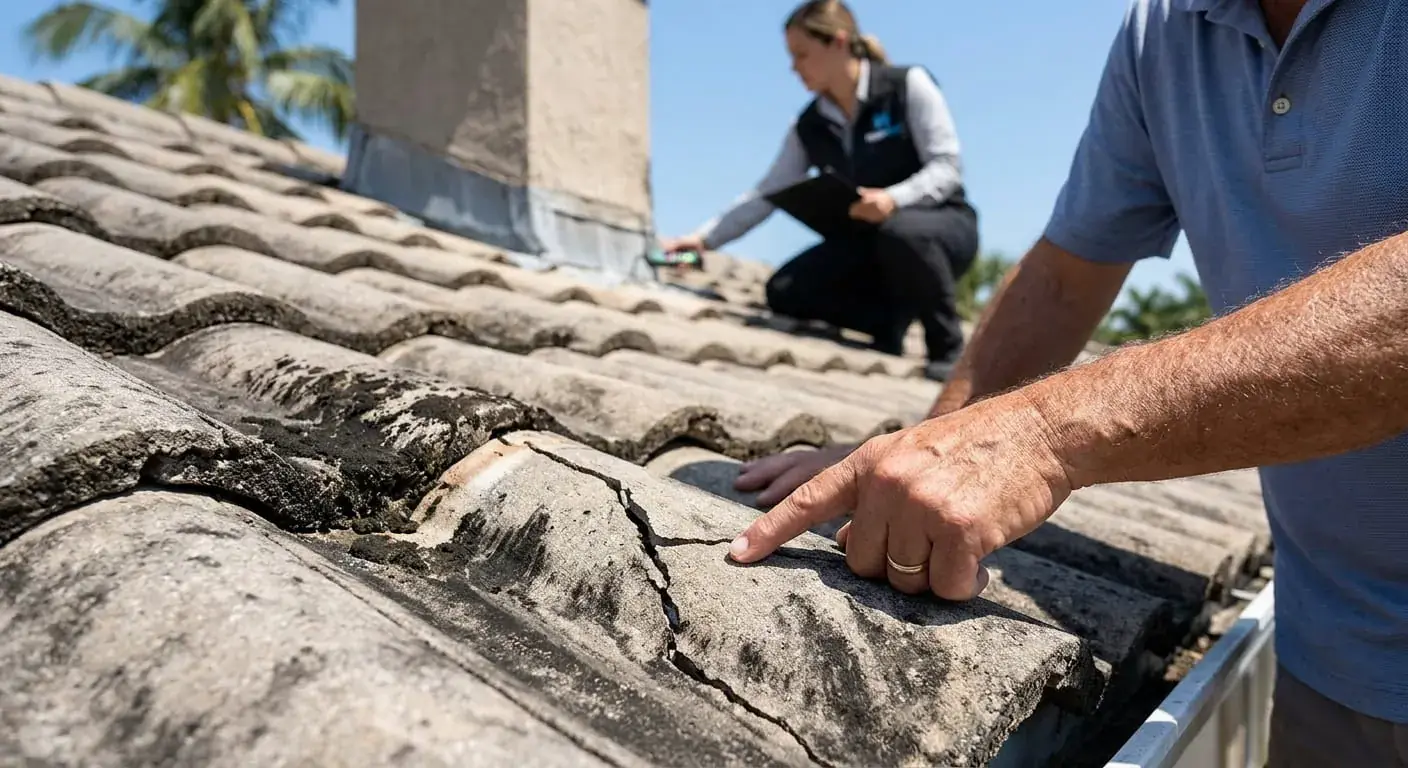
How Often Should You Inspect a Roof in Florida?
There is no single inspection schedule that fits every Florida roof. The right timing depends on the roof's age and condition, recent weather, previous repairs, material, property changes and the consequences of leaving a developing problem unnoticed.
For Miami homeowners, storm exposure makes post-weather inspections especially useful, while routine inspections can help identify deterioration before it becomes an active leak.
Routine inspections versus event-driven inspections
A routine inspection looks at the roof's current condition without waiting for a specific failure. An event-driven inspection happens because something changed: a hurricane, severe thunderstorm, visible damage, a leak, a property purchase or another reason to question the roof's condition.
Both have value. A routine inspection can establish a baseline, while an event-driven inspection can identify new problems after a specific event.
Inspect after significant storms
Severe wind and rain can change a roof quickly. Missing materials, damaged flashing, debris impact and water intrusion may not be obvious from inside the house. If a major storm passes through the area, homeowners should consider a professional assessment rather than assuming the roof is fine because no immediate ceiling stain appeared.
Florida's Hurricane Retrofit Guide recommends evaluating the roof covering and other parts of the roofing system when considering hurricane performance. Review the official Florida roof guidance.
Inspect sooner when the roof is aging
As a roof gets older, inspection becomes more useful because small defects can become harder to distinguish from broader material deterioration. Age does not automatically mean replacement, but it can change how aggressively homeowners should monitor the roof.
Read how roof lifespan is affected by Miami's climate and how to recognize replacement warning signs.
Inspect when you notice a leak or visible change
A ceiling stain, damaged roofing material, recurring moisture, unusual debris or a change in drainage is a reason to investigate rather than wait for the next major rainstorm.
The earlier a problem is understood, the more clearly a homeowner can decide whether the appropriate response is maintenance, localized repair or a larger project. Our Miami roof inspection guide explains what a professional inspection should cover.
Inspections can be useful before buying or selling
A roof is a major part of a property's condition. If you are buying a home, an inspection can help you understand the roof's apparent age, visible condition and repair history. Sellers may also benefit from understanding the roof before a transaction exposes an issue.
Insurance-related inspections are a separate matter. Florida's Department of Financial Services explains that insurers may request specialized roof inspections or wind mitigation inspections depending on the policy and property. See the official insurance overview.
What should happen during the inspection?
A useful inspection should consider the roof covering, flashing, penetrations, drainage and visible signs of water intrusion. Depending on the property, the inspector may also discuss the roof's age, repair history and storm exposure.
The goal is to produce actionable information. Ask the inspector to separate immediate concerns from routine maintenance and explain whether any findings suggest repair or replacement.
How often is “often enough”?
Rather than following an arbitrary calendar rule, think in terms of triggers. Have the roof evaluated when it is aging, after significant storms, when you notice a leak or visible deterioration, before major property decisions, and whenever a previous repair does not appear to have solved the problem.
A professional can then help you determine an appropriate monitoring plan for the specific roof.
Frequently asked questions
Should I inspect my roof every year?
An annual or otherwise regular professional review may be useful for some properties, but the appropriate schedule depends on the roof's condition and exposure. Storms and visible problems can justify an inspection sooner.
Do I need an inspection if there is no leak?
A roof can have developing problems without an interior leak. Inspection is especially useful after severe weather or as a roof ages.
Can I inspect the roof myself?
Homeowners can observe the roof from safe ground-level locations, but climbing onto a roof introduces fall risk and may not reveal hidden problems. Professional inspection is preferable for a detailed evaluation.
The practical takeaway
In Florida, inspection timing should respond to both the calendar and the condition of the roof. For Miami homes, severe weather is an important trigger, but so are age, visible changes and major property decisions.
If you want to understand what your roof needs next, start with the Miami roof inspection guide or continue through the Miami roofing resource center.
Sources and further reading
- Florida Hurricane Retrofit Guide — Roofs
- Florida Department of Financial Services — Homeowners Insurance
- Miami-Dade County — Roofing Permits
Related Miami roofing guides
Roof leak response · Hurricane roof damage · Replacement cost · More roofing advice